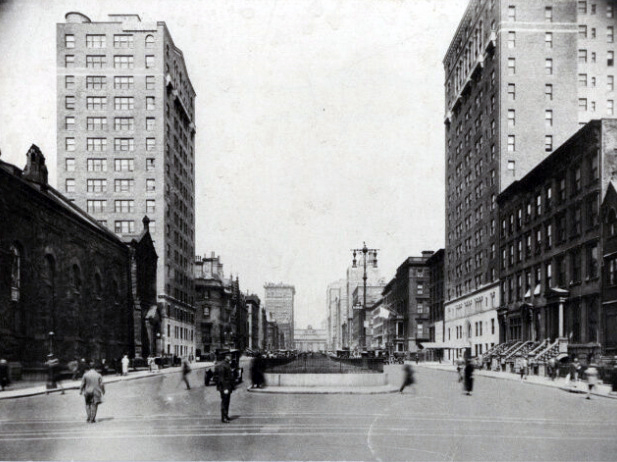
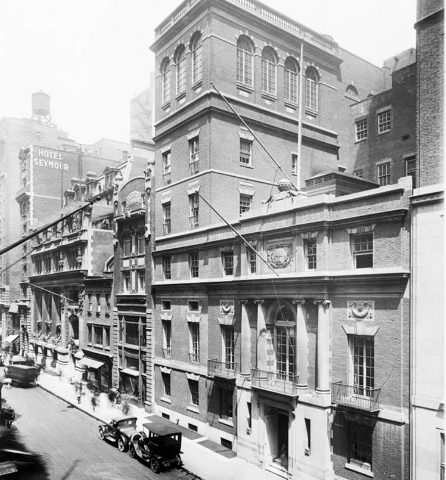
He returned to America in 1912 because of one of his grandfather’s sudden illnesses, and after an excessively tiresome talk with the perpetually convalescent old man he decided to put off until his grandfather’s death the idea of living permanently abroad. After a prolonged search he took an apartment on Fifty-second Street and to all appearances settled down. [...]
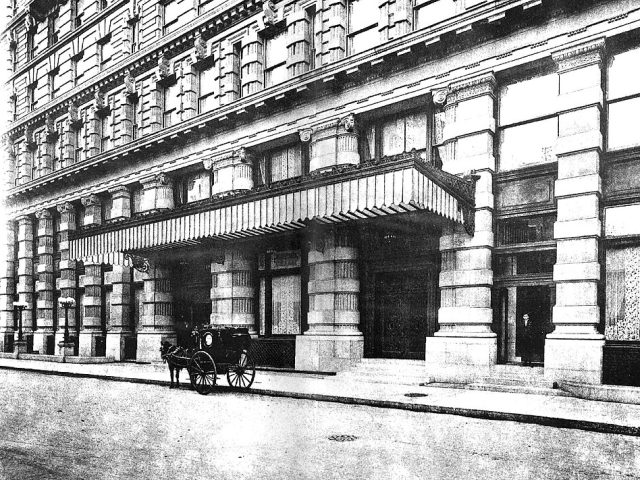
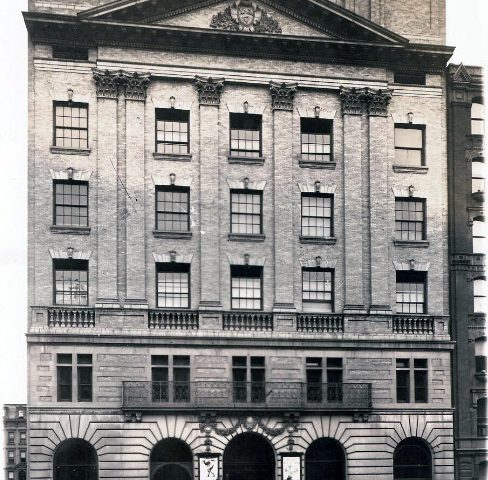
The house itself was of murky material, built in the late nineties; in response to the steadily growing need of small apartments each floor had been thoroughly remodelled and rented individually. Of the four apartments Anthony’s, on the second floor, was the most desirable.
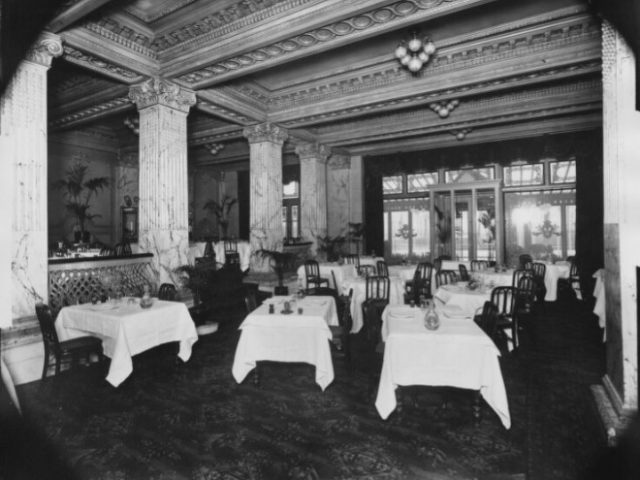
The front room had fine high ceilings and three large windows that loomed down pleasantly upon Fifty-second Street. In its appointments it escaped by a safe margin being of any particular period; it escaped stiffness, stuffiness, bareness, and decadence. It smelt neither of smoke nor of incense—it was tall and faintly blue. There was a deep lounge of the softest brown leather with somnolence drifting about it like a haze. There was a high screen of Chinese lacquer chiefly concerned with geometrical fishermen and huntsmen in black and gold; this made a corner alcove for a voluminous chair guarded by an orange-colored standing lamp. Deep in the fireplace a quartered shield was burned to a murky black.
Passing through the dining-room, which, as Anthony took only breakfast at home, was merely a magnificent potentiality, and down a comparatively long hall, one came to the heart and core of the apartment—Anthony’s bedroom and bath.
Both of them were immense. Under the ceilings of the former even the great canopied bed seemed of only average size. On the floor an exotic rug of crimson velvet was soft as fleece on his bare feet. His bathroom, in contrast to the rather portentous character of his bedroom, was gay, bright, extremely habitable and even faintly facetious. Framed around the walls were photographs of four celebrated thespian beauties of the day: Julia Sanderson as The Sunshine Girl, Ina Claire as The Quaker Girl, Billie Burke as The ‘Mind-the-Paint’ Girl, and Hazel Dawn as The Pink Lady. Between Billie Burke and Hazel Dawn hung a print representing a great stretch of snow presided over by a cold and formidable sun—this, claimed Anthony, symbolized the cold shower.
The Beautiful and Damned