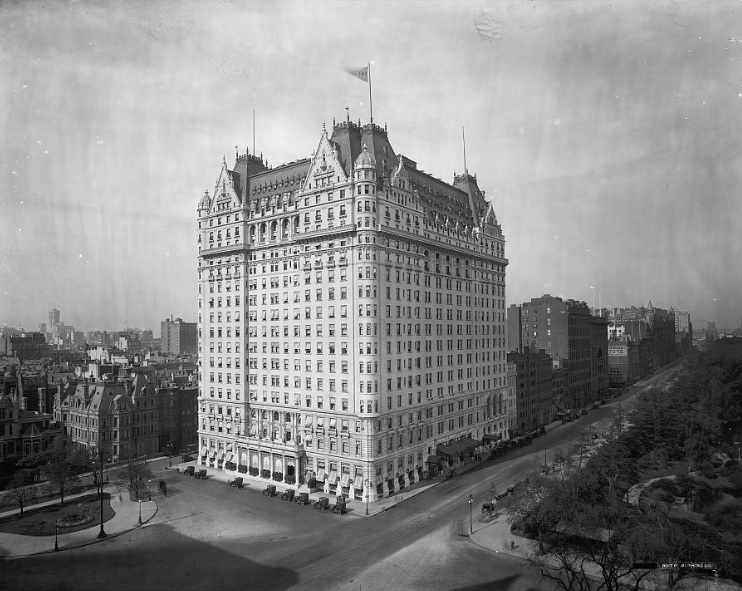
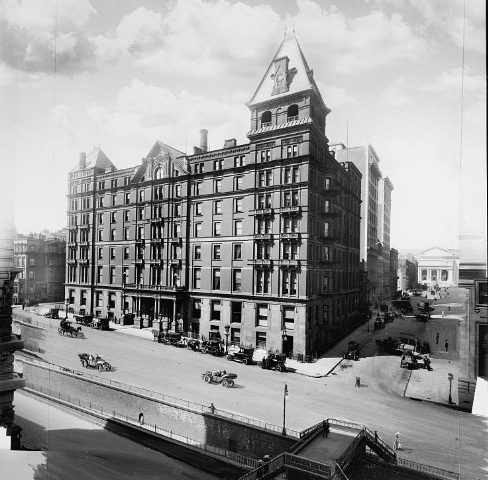
“You follow me to the south side of Central Park, in front of the Plaza.”
Several times he turned his head and looked back for their car, and if the traffic delayed them he slowed up until they came into sight. I think he was afraid they would dart down a side-street and out of his life forever.
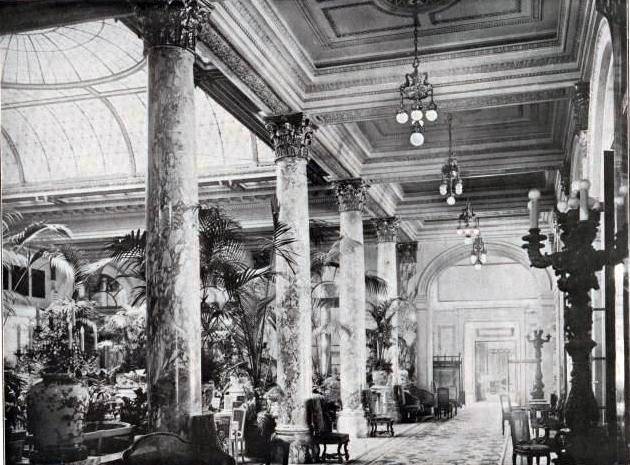
But they didn’t. And we all took the less explicable step of engaging the parlour of a suite in the Plaza Hotel.
The prolonged and tumultuous argument that ended by herding us into that room eludes me, though I have a sharp physical memory that, in the course of it, my underwear kept climbing like a damp snake around my legs and intermittent beads of sweat raced cool across my back. The notion originated with Daisy’s suggestion that we hire five bathrooms and take cold baths, and then assumed more tangible form as “a place to have a mint julep.” Each of us said over and over that it was a “crazy idea”—we all talked at once to a baffled clerk and thought, or pretended to think, that we were being very funny…
The room was large and stifling, and, though it was already four o’clock, opening the windows admitted only a gust of hot shrubbery from the Park. Daisy went to the mirror and stood with her back to us, fixing her hair.
“It’s a swell suite,” whispered Jordan respectfully, and everyone laughed.
“Open another window,” commanded Daisy, without turning around.
“There aren’t any more.”
“Well, we’d better telephone for an axe—”
“The thing to do is to forget about the heat,” said Tom impatiently. “You make it ten times worse by crabbing about it.”
He unrolled the bottle of whisky from the towel and put it on the table.
The Great Gatsby